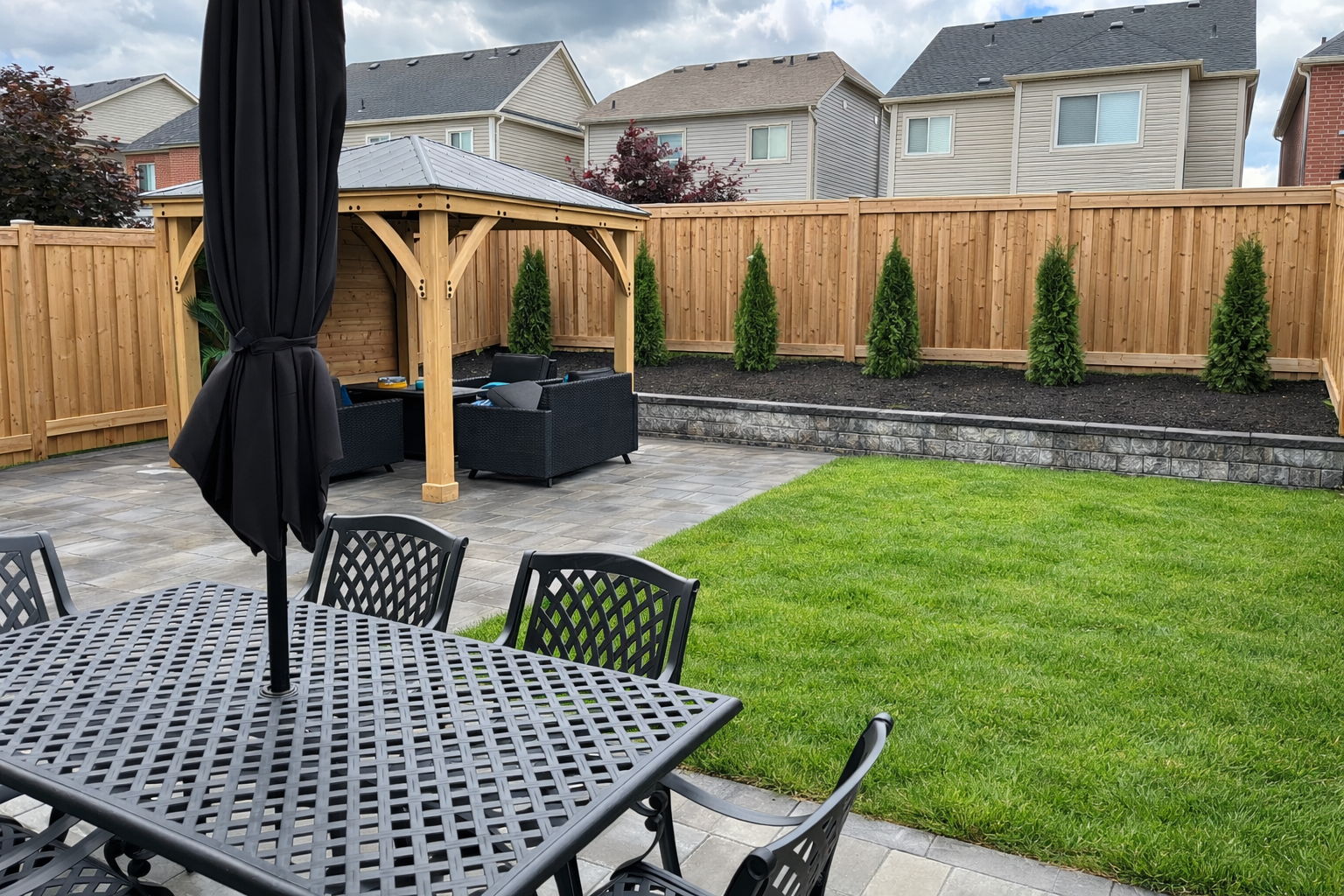
A well-designed outdoor space does not end when the sun sets. Thoughtful lighting extends the hours you can use and enjoy your landscape while revealing the character of materials and forms in ways daylight never shows. It is both functional and atmospheric, serving practical needs while shaping how a space feels after dark.
Lighting as Design, Not Decoration
Outdoor lighting works best when it is considered from the beginning of the design process rather than added afterward. The placement of fixtures, the direction of light, and the relationship between illuminated and shadowed areas all contribute to the overall composition. When lighting is integrated into the hardscape itself, it becomes part of the architecture rather than something attached to it.
We approach lighting as a design element with the same attention we give to material selection and spatial layout. The goal is not simply to make spaces visible but to shape how they are experienced in the evening hours.
Safety Through Considered Placement
Beyond atmosphere, lighting serves essential safety functions. Steps become hazards in darkness. Changes in grade disappear. Pathways lose definition. Proper illumination addresses these concerns without overwhelming the space with brightness.
Step lighting integrated into risers marks elevation changes clearly. Path lighting at low levels guides movement without creating glare. Subtle illumination at transitions between materials or surfaces helps visitors navigate intuitively. The result is a space that feels safe to use without the harsh quality of security lighting.
Creating Evening Atmosphere
The quality of light matters as much as its presence. Warm colour temperatures create a sense of comfort and invitation. Indirect lighting produces softer shadows than direct sources. Layering multiple light sources at different heights adds depth and visual interest to the landscape.
Uplighting on trees reveals canopy structure from below. Grazing light across textured walls emphasizes surface character. Soft illumination beneath seating walls creates a floating effect. Each technique contributes to an atmosphere that feels intentional rather than incidental.
Low-Voltage Systems and Longevity
Modern low-voltage LED systems offer significant advantages for landscape lighting. They consume less energy, generate minimal heat, and provide consistent colour rendering over extended lifespans. The reduced voltage also allows for safer installation within hardscape elements where fixtures may be near water or in direct contact with stone.
Quality fixtures designed for outdoor use withstand the demands of Ontario's climate. Proper sealing, corrosion-resistant materials, and robust construction ensure that the lighting system performs reliably season after season. The initial consideration given to fixture selection pays dividends in reduced maintenance and consistent performance.
Integration During Construction
The most effective outdoor lighting installations happen during initial construction. Wiring can be routed through base materials before pavers are set. Fixtures can be positioned precisely within walls and steps as they are built. Conduit can be placed to allow for future expansion without disturbing finished surfaces.
This approach results in cleaner installations with no visible wiring and fixtures that appear as natural parts of the structure. It also allows for more thoughtful placement, as decisions can be made while the space is taking shape rather than after construction is complete.
Designing for Day and Night
Every outdoor environment we create is considered for both daylight and evening use. If lighting is part of your project vision, we welcome the opportunity to discuss how it can be integrated thoughtfully from the start.
Request a Consultation