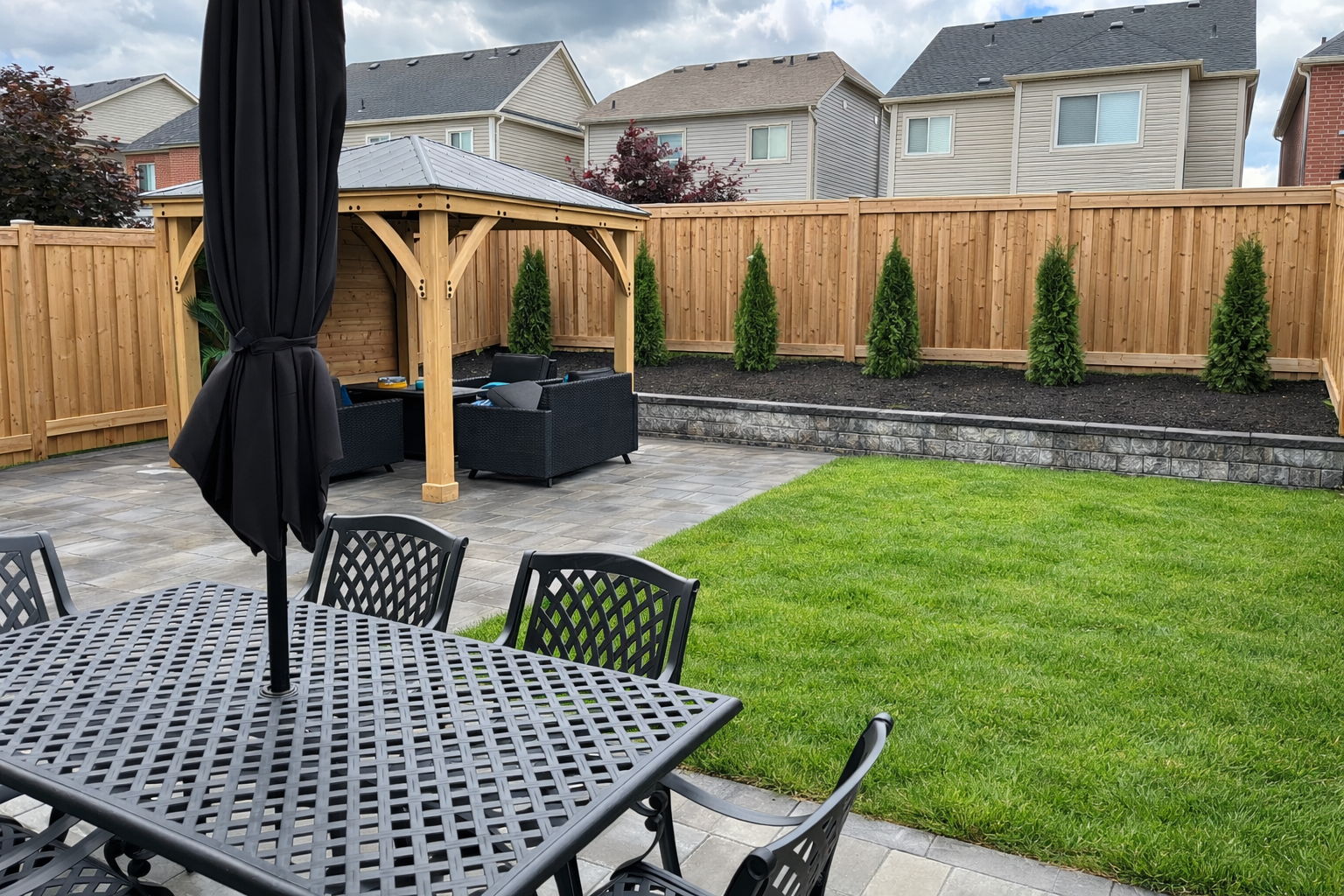
Simcoe County winters are legendary for their intensity. While our projects are built to withstand the harshest Canadian conditions, a small amount of proactive maintenance can significantly extend the visual and structural lifespan of your investment. Here is how to keep your interlock and walls in pristine condition through the snow and ice.
1. Choose Your De-Icer Wisely
The single biggest threat to interlock surfaces is traditional rock salt (Sodium Chloride). It can cause "spalling" — where the top layer of the stone begins to flake or pits. Instead, use Calcium Chloride or clean sand for traction. Calcium Chloride is safer for concrete products and effective at much lower temperatures.
2. Use Plastic Shovels or Protectors
Metal shovels can scratch the surface of premium pavers, especially those with smooth, modern finishes. Opt for a high-quality plastic shovel with a protective edge. If you use a snowblowing service, ensure they use a "poly" or rubber scraper bar on their equipment to avoid metal-on-stone contact.
3. Inspect Your Joints
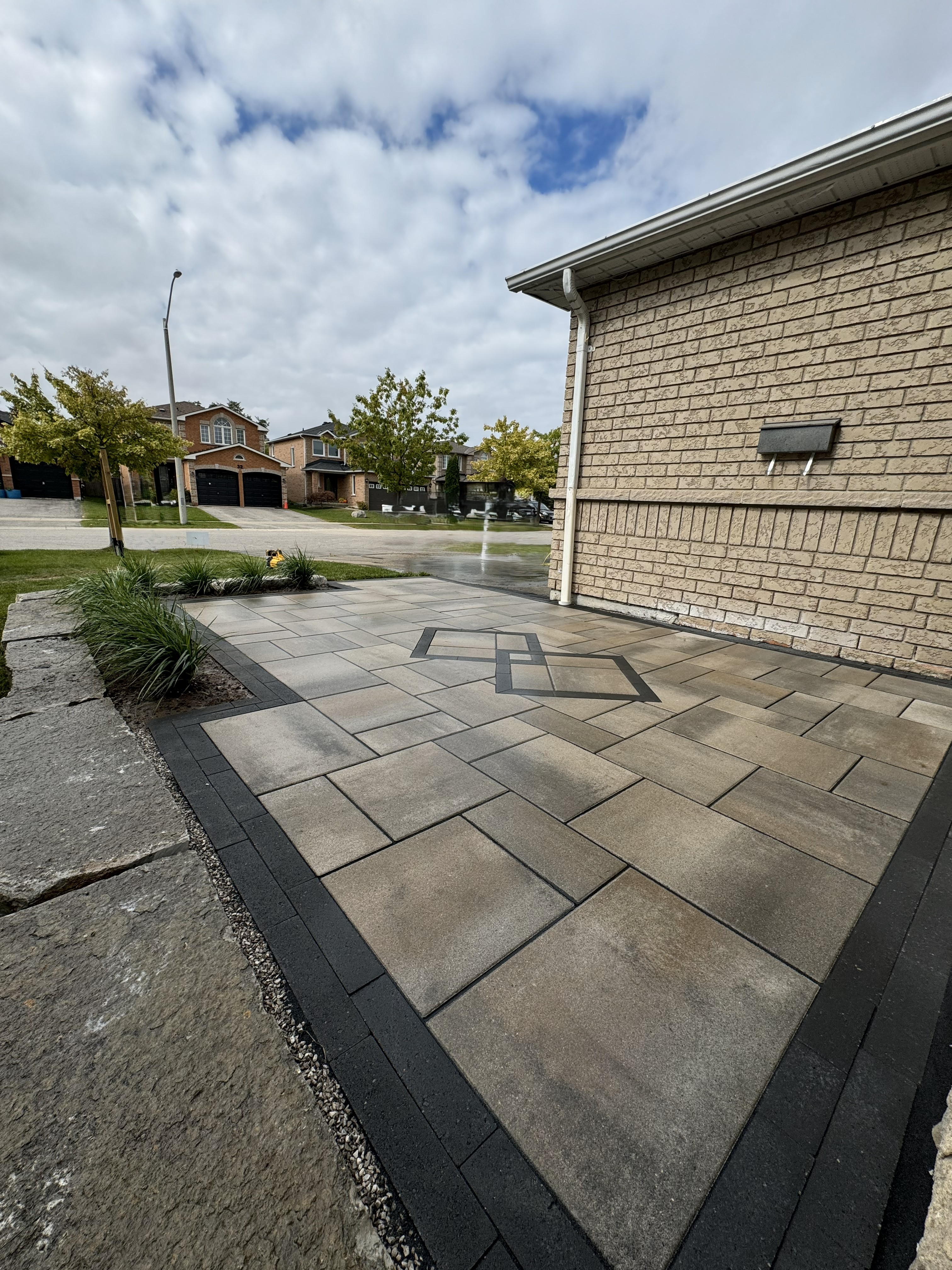
Before the first snowfall, take a quick walk around your project. If you notice any areas where the polymeric sand has washed away, fill them immediately. Open joints allow water to seep behind walls or under pavers, which then freezes and expands, leading to heaving. A few minutes of touch-up can save hours of repair later.
4. Clear the Drainage Path
Ensure that downspouts are clear and directed away from your hardscape surfaces. Ice buildup from dripping eaves is a primary cause of localized heaving. By directing water flow appropriately, you reduce the humidity levels currently trapped under the base system, keeping it stable when the ground freezes solid.
Need a Spring Refresher?
If your older landscape is showing signs of winter fatigue, we offer professional restoration and maintenance services. Let's get your outdoor space ready for the new season.
Request a Consultation