
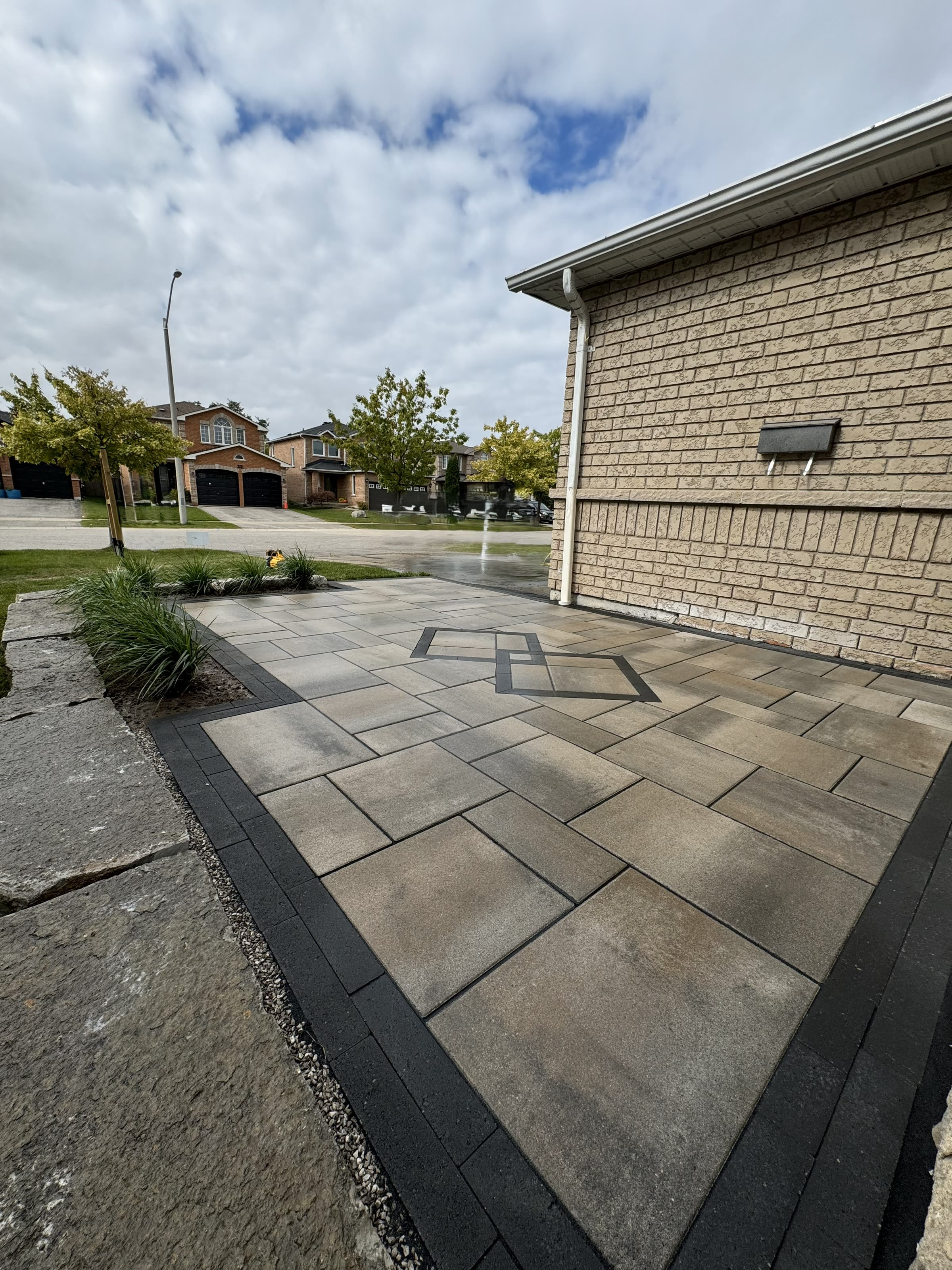
You’ve gathered three quotes for your new backyard patio. Two contractors came in around $35,000. The third contractor said they could do it for $18,000.
Human nature tells you to go with the $18,000 quote. It's just some stones and dirt, right? How different could the final product really be?
The answer is: completely different. The $18,000 quote isn't a bargain. It's a ticking time bomb. Let's look exactly where that 'discount' is coming from.
Where the Cheap Contractor Cuts Corners
A premium landscaping company has fixed costs—materials, insurance, machinery, and skilled labour. If someone is bidding half the price, they aren't working for free; they are simply installing half the product. Here is what you are missing when you take the lowest bid:
1. The Invisible Foundation (The 6-Inch Base)
The number one place cheap contractors save money is excavation. Digging properly requires heavy machinery, expensive disposal bins, and tons of new aggregate.
A professional contractor digs 14-16 inches deep for a patio to get below the frost heave zone. The cheap contractor digs 4-6 inches. On day one, both patios look identical. After one Barrie winter, the shallow base will heave, sink, and crack.
2. Skipping the Geotextile and Geogrid
Geotextile fabric separates your clay soil from the clear stone base. Without it, the clay eventually migrates up into the stone, ruining its drainage capacity. Geogrid is a high-tensile mesh used to tie retaining walls securely into the earth.
These materials cost money and take time to install correctly. The low bidder skips them entirely. When your retaining wall starts leaning forward 18 months later, this is why.
3. Poor Drainage Planning
Water is the enemy of hardscaping. A proper patio installation includes subtle grading (a 1.5% to 2% slope), perforated drain tiles, and careful assessment of where water will flow during a storm.
Cheap installations act like dams. They trap water against your house foundation, leading to flooded basements, or pool water on the patio surface, which freezes and destroys the pavers.
4. Bait-and-Switch Materials
That low quote likely doesn't specify the exact paver brand or line. You might assume you're getting a premium EnduraColor Unilock product, but the contractor shows up with a thin, builder-grade paver from a big-box store that will lose its colour within two years.
5. WSIB and Liability Insurance
This is the scariest cut corner. Premium contractors pay significant premiums for WSIB (Workplace Safety and Insurance Board) and multimillion-dollar liability policies.
The guy in the unmarked truck doing it for $18k cash? He likely has neither. If one of his workers cuts their foot with a quick-cut saw on your property, you can be held personally liable for their medical bills and lost wages.
The True Cost of Doing It Twice
Every year, half of our summer schedule is spent ripping out "cheap" patios and failing retaining walls that were installed 2 or 3 years prior.
Here is the real math on that $18,000 "bargain":
- Initial cheap installation: $18,000
- Cost to demolish and dump the failed patio: $5,000
- Cost to finally build it correctly: $35,000
- Total actual cost: $58,000
"You aren't saving $17,000 by choosing the lowest bid. You are just paying an $18,000 deposit on a headache you'll have to fix in three years."
How to Protect Yourself
If a quote seems too good to be true, ask the contractor these specific questions in writing:
- "Exactly how many inches deep will you excavate for the base?"
- "Are you using 3/4 clear stone or gravel dust for the base?"
- "Can you provide a current WSIB clearance certificate today?"
- "Does your contract include a multi-year warranty covering sinking and settlement?"
If they hesitate on any of these, walk away. Your home is too valuable to trust to the lowest bidder.