
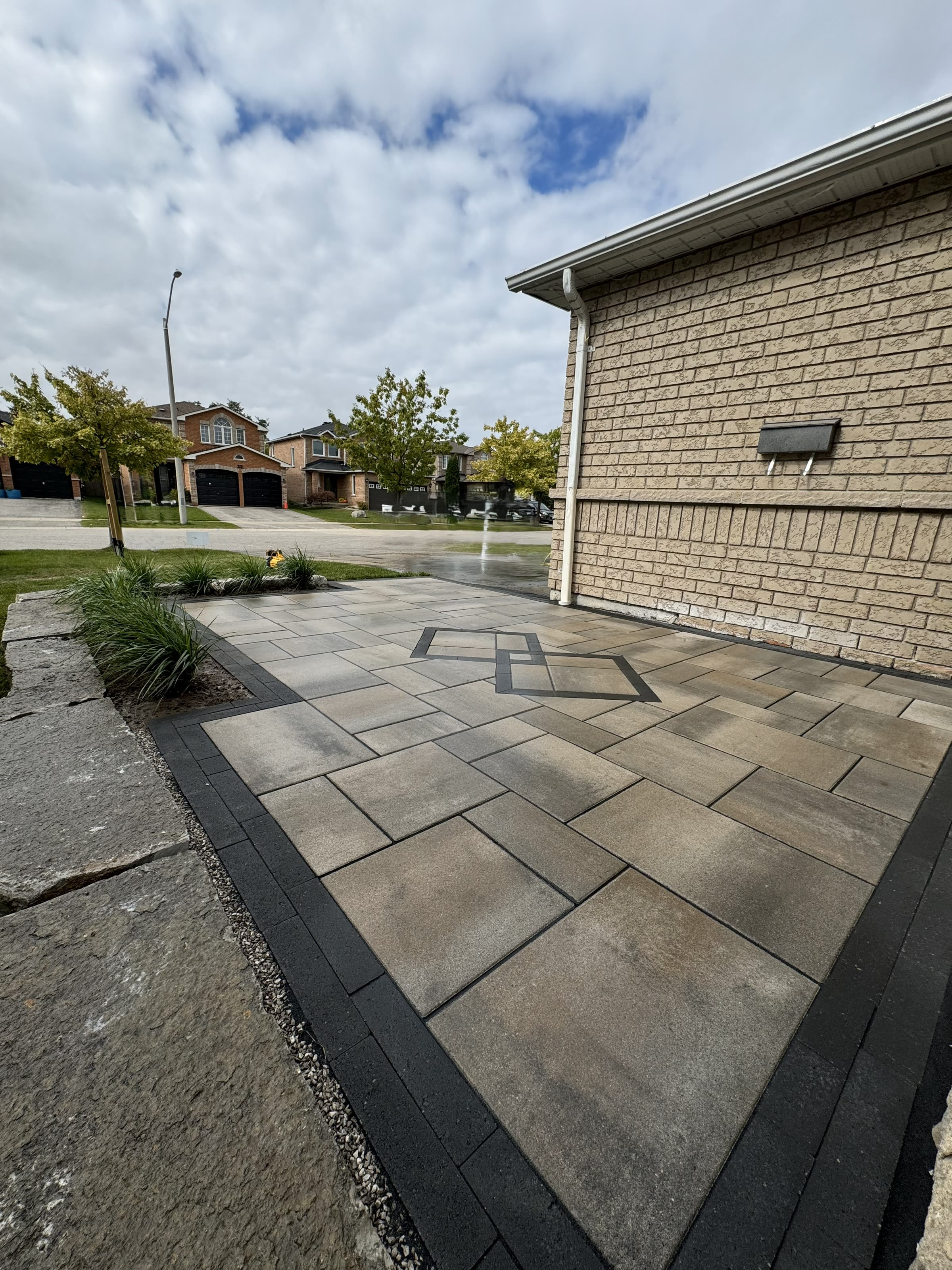
Your interlocking patio is built to last — but it's not indestructible. The combination of rock salt, metal snowplow blades, and ice buildup can cause damage that shortens its lifespan and ruins its appearance. Here's how to protect your investment through every Barrie winter.
The Salt Problem
Rock salt (sodium chloride) is the most common de-icer, and it's also the most damaging to interlocking stone. Here's what it does:
- Surface pitting: Salt crystals absorb moisture, expand, and physically break down the paver surface over time.
- Efflorescence: Salt deposits create white, chalky stains that are difficult to remove.
- Joint erosion: Salt dissolves polymeric sand faster, opening up joints where weeds can establish.
- Colour fading: Repeated salt exposure dulls the colour of standard pavers (EnduraColor pavers from Unilock resist this better than most).
Better Alternatives to Rock Salt
- Calcium magnesium acetate (CMA): The gentlest option. Safe for pavers, concrete, and vegetation. More expensive but worth it for premium surfaces.
- Sand or fine gravel: Provides traction without any chemical damage. Old-fashioned but effective.
- Calcium chloride: Works at lower temperatures than rock salt and is slightly less damaging, but still not ideal for frequent use.
- Heated snow-melt systems: For clients who never want to deal with ice at all, we can install hydronic or electric heating under the paver surface. This is the premium solution for high-traffic areas like walkways and front entrances.
Snow Removal Best Practices
- Use a plastic-edged shovel: Metal shovels and steel plow blades will scratch, chip, and gouge paver surfaces. Plastic or rubber-edged tools glide over the surface without damage.
- Plow gently: If your plow service handles your patio, make sure they know to lift the blade slightly. A plow blade catching a raised paver can dislodge stones and crack edges.
- Clear promptly: Don't let snow sit and go through freeze-thaw cycles on your patio. The sooner you clear it, the less ice buildup you'll deal with.
- Avoid metal ice scrapers: When ice forms directly on the surface, pour warm (not boiling) water and use a CMA-based de-icer. Chipping at ice with metal tools is a guaranteed way to damage your pavers.
Spring Recovery Checklist
Once the snow melts, do this inspection within the first two weeks:
- Check for shifting: Walk the entire surface and feel for any stones that have moved, settled, or heaved.
- Inspect joints: Are there gaps where polymeric sand has washed out? Re-sanding joints is quick and inexpensive — and it's critical for preventing weed growth and ant colonies.
- Look for drainage issues: Is water pooling anywhere new? This could indicate base settlement.
- Clean the surface: A pressure washer on a low setting (under 1500 PSI) removes winter grime. Follow with a fresh application of joint sand if needed.
"The homeowners who take 30 minutes every spring to inspect and maintain their patio are the ones whose patios still look brand new after 10 years. It's a small investment of time for a big return."
When to Call a Professional
Contact us if you notice:
- Multiple stones that have heaved or settled noticeably
- Drainage patterns that have changed significantly
- Edge restraints that have separated from the patio
- Cracks in retaining walls adjacent to the patio
These could indicate a base issue that needs professional attention. Under our 5-year warranty, structural issues like sinking and settlement are covered at no charge.