
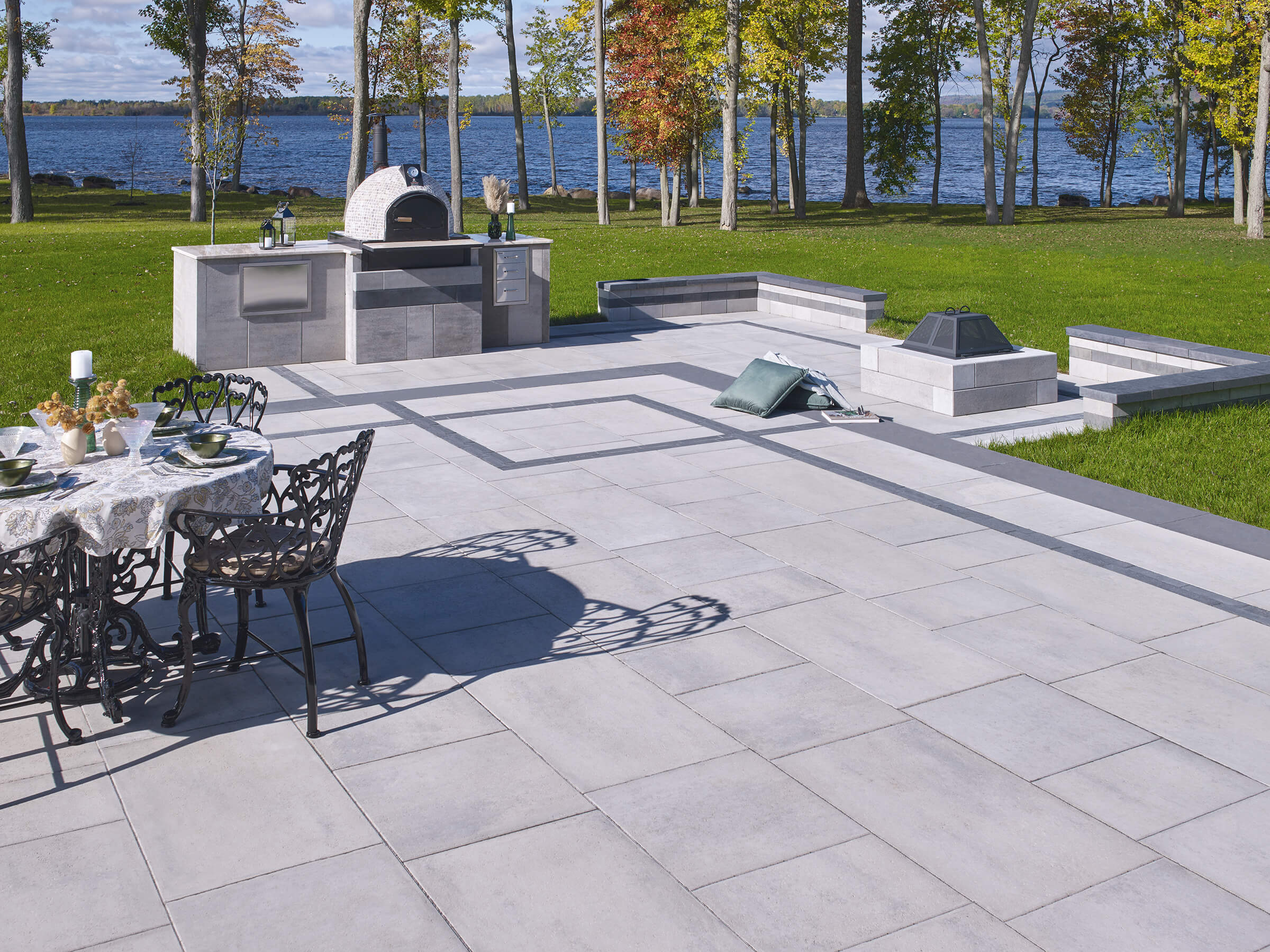
Drive through any older neighbourhood in Barrie or Innisfil in the spring, and you'll see the same thing: interlocking patios and walkways sprouting a healthy crop of weeds and dotted with anthills. Homeowners are out there with pressure washers and weed pullers, spending a beautiful May weekend fighting a battle they lost the moment the wrong sand was swept into their paver joints. It’s a frustrating cycle, and it’s completely avoidable.
The material that fills the tiny gaps between your pavers isn't just filler. It's a critical structural component. The choice between cheap, regular sand and modern polymeric sand is the difference between a patio that looks great for a season and one that performs for a decade or more. Here in Simcoe County, with our heavy snow load, spring melts, and notorious freeze-thaw cycles, this choice is everything. It dictates whether your investment stays flat and stable or becomes a wobbly, weed-infested headache.
What is Jointing Sand, Anyway?
Before we get into the modern solution, let's be clear about what we're talking about. The sand between pavers is called jointing sand. Its primary job isn't to look nice; it's to create friction between the pavers, locking them together into a single, flexible surface. This is the “interlock” in an interlocking paver system. When you walk or drive on the pavers, the load is distributed to the neighbouring stones through this sand-filled joint. This system needs to be strong but also have the ability to move ever so slightly as the ground beneath it freezes and thaws.
For decades, the standard was regular paver sand, sometimes called joint sand or ASTM C-144 sand. It's essentially just coarse, washed sand. Its only real advantage is that it's cheap. The disadvantages, however, are significant, especially in our climate. Regular sand is loose. Heavy rainfall, like the thunderstorms we get rolling off Lake Simcoe, can easily wash it out of the joints. Snowmelt does the same thing, but slower. Every time sand is lost, the interlock weakens. The pavers can start to wobble and shift against each other.
Worse yet, those empty or partially filled joints become perfect little channels for water to get down to the base material. They also become perfect little flowerpots for airborne seeds. That's why you see weeds. The gaps also invite ants and other insects to build their colonies, further excavating the sand and compromising the system. Using regular sand means committing to a yearly maintenance routine of weeding and topping up the joints, hoping to stay ahead of the inevitable decay.
The Polymeric Sand Solution: How It Works
Polymeric sand is a game-changer. It's a mix of fine, graded sand and a polymer binding agent. The product comes dry, looks like regular sand, and is swept into the joints in the exact same way. The magic happens when you introduce a specific amount of water. Once activated by a light misting, the polymers create a durable, flexible bond, hardening the sand into a material that feels almost like a firm grout.
This hardened-but-flexible joint solves all the problems of regular sand in one go:
- It locks in place. Heavy rain and pressure washing won't blast it out. This preserves the structural interlock and protects the bedding layer and base from water infiltration, which is a major cause of why patios sink.
- It resists weeds. A properly installed polymeric sand joint is too dense and hard for most seeds to germinate in. You might get the odd surface weed from debris that has collected on top, but it can't put down deep roots.
- It deters insects. Ants can't excavate polymeric sand. By eliminating their ability to build nests between your pavers, you eliminate the number one insect-related cause of paver destabilization.
- It accommodates movement. This is the most important part for us in Ontario. The polymer bond isn't rigid like mortar. It has enough flexibility to allow the pavers to move ever so slightly during the winter ground heave and settle back into place in the spring without the joint cracking or failing.
Using polymeric sand turns the joints from the weakest point of your patio into a high-performance component that enhances the entire system's longevity. It's an engineered material designed specifically for the challenges that interlocking paver surfaces face.
Why Our Freeze-Thaw Cycles Demand Polymeric Sand
If you live anywhere along the Highway 400 corridor from Barrie up to Midland, you know our winters are serious. It's not just the cold; it's the cycling between frozen and thawed that wreaks havoc on hardscapes. The clay-heavy soil common in Simcoe County holds a lot of moisture. When this moisture freezes, it expands, causing the ground to heave upwards. In the spring, it thaws and settles back down.
This movement is unstoppable. A properly built paver patio is designed to “float” on a deep, well-compacted gravel base, allowing it to ride this wave without breaking apart. The joints are critical to this flexibility. With regular sand, every time the patio heaves, joints can loosen and widen. During the spring melt, water and fine silt wash into these gaps. When the patio settles back down, it might not settle perfectly, because the joints are now contaminated or partially empty. The pavers are no longer tightly locked. Over a few seasons, this leads to wobbling, shifting, and sunken spots.
Polymeric sand is the answer to this problem. Because it's a flexible solid, it moves with the pavers. When the ground heaves, the joint flexes. When it settles, the joint returns to form, maintaining that crucial friction lock between every stone. The seal remains intact, so meltwater runs off the surface instead of into the base. It’s the single biggest factor, after a proper base, in creating a patio that can survive a Barrie winter and look just as good a decade later as it did on day one. For us, using anything less is simply not a professional option.
Installation is Everything: The Craft of a Perfect Joint
Having a bag of the best polymeric sand doesn't guarantee a good result. The installation process is meticulous and unforgiving. This is where a professional crew's experience makes a massive difference. One mistake can lead to failure or, more commonly, a permanent haze on the surface of your expensive pavers.
First, the entire patio surface and the joints must be completely, bone-dry. Any moisture can cause the polymers to activate prematurely, preventing the sand from compacting deep into the joint. Second, after the pavers are laid, we run a plate compactor over them to settle them into the bedding sand and ensure they are level. Only then do we sweep in the sand. We sweep from multiple directions to ensure every joint is filled to the very bottom.
Next comes the most critical step for aesthetics. We use a leaf blower to remove every single grain of excess sand from the surface of the pavers. Any sand left on top will activate when wetted, creating a permanent, hazy film called “poly-haze.” It’s the tell-tale sign of a rushed or inexperienced installation. Finally, we wet the patio. This isn't done with a jet spray from a hose; it’s a gentle shower or mist setting. The goal is to apply just enough water to soak the joint from top to bottom, activating all the polymers, without using so much force that it washes the polymers and sand out. It's a delicate balance that takes practice to get right. We only use high-quality sands from brands like Unilock or Techniseal, often sourced from our local supplier, Carr Landscape Depot in Barrie, to ensure consistent, reliable results for the Permacon, Unilock, and Techo-Bloc pavers we install.
The Real Cost: An Investment vs. An Expense
Let’s be direct about the cost. A bag of high-quality polymeric sand can cost $35-$50, while a bag of regular jointing sand might be under $10. On a medium-sized patio, this can add several hundred dollars to the material cost of the project. Some homeowners, and even some budget-focused contractors, see this as an easy place to save money. This is a classic example of a false economy.
Think about the cost over five years. With regular sand, you will be buying new sand to top up the joints at least every other year, if not annually. You'll spend hours on your knees weeding, or you'll pay for chemicals to kill them. You'll need to pressure wash more often to remove moss and grime that thrives in the damp, open joints. And most significantly, you have a much higher risk of needing professional repairs for sunken or shifted pavers within that five-year window, a cost that can run into the thousands.
With a professional polymeric sand installation, your maintenance for the first 5-10 years is essentially zero. You sweep it. That's it. The extra couple of hundred dollars you spend upfront buys you back dozens of hours of your own time and provides peace of mind that your investment is protected. It's not an upsell; it's a fundamental part of building a hardscape that lasts in Ontario. When you use our online cost estimator, the price you see is based on doing the job right, and that always includes polymeric sand.
Frequently Asked Questions
How long does polymeric sand last in Ontario?
A professional-grade polymeric sand, properly installed in a patio with a solid base, should last 8 to 15 years in our Simcoe County climate before it may need major touch-ups or replacement. The lifespan depends on traffic, drainage, and sun exposure.
Can I just put polymeric sand over the old sand in my patio?
No, this is a recipe for failure. You must remove at least the top 1.5 inches of old sand and weeds to ensure the polymeric sand can fill the joint deeply and bond correctly. Simply topping it up will create a thin, weak crust that will flake off.
Why are there still weeds growing in my polymeric sand?
If you see weeds, it's usually one of two things. Either the sand was installed improperly, leaving voids, or more commonly, the weeds are growing in the tiny layer of dirt and debris that has accumulated on *top* of the sand. These weeds are shallow-rooted and can typically be removed very easily by hand or with a leaf blower.
What's the cost difference between polymeric and regular sand for a Barrie patio?
The material itself can be 4-5 times more expensive for polymeric sand. For an average 400 sq. ft. patio, this might add $300-$500 to the total project cost. However, this cost is quickly offset by saving you years of re-sanding, weeding, and potential repair costs.
Does polymeric sand stop ants for good?
Yes, it is highly effective at preventing ants from nesting between your pavers. The hardened sand is too dense for them to excavate, forcing them to find an easier place to build their colonies, like your lawn or garden beds.
How do you repair a paver in a patio with polymeric sand?
It's more involved than with regular sand but very manageable. We use a pressure washer with a fine tip or a utility knife to carefully break and cut out the hardened sand around the paver. Once the paver is replaced, the joints are re-filled with new polymeric sand and activated.
Is polymeric sand waterproof?
No, it is not waterproof, but it is highly water-resistant. It's designed to be permeable so that a small amount of water can pass through, but it sheds the vast majority of rainwater off the surface. This prevents the large-scale water infiltration that washes away regular sand and damages the base.
The choice of jointing sand is a small detail that has a massive impact on how your patio performs and how much work it creates for you down the line. Here in Barrie and across Simcoe County, building for the climate isn't optional. At Golden Maple Landscaping, we build every interlocking project with a deep base and high-quality polymeric sand because it's the only way to do it right. If you're ready for a low-maintenance patio that's engineered to last, we should talk. You can see examples of our work in our portfolio or reach out to us directly through our contact page.