
Porcelain Patios in Barrie
Porcelain looks like tile.
It has to be built like a patio.
Outdoor porcelain pavers give you the clean, large-format look of interior tile. They absorb almost no water, the colour doesn't fade, and the surface shrugs off wine, grease and pool chemicals. They are also unforgiving. A porcelain slab can't be tamped into place like a concrete paver, and it cracks or rocks if the base underneath moves.
In Barrie that means designing the base for freeze-thaw and clay soil first. The porcelain is the finish; the base is the patio.
What a porcelain patio scope covers
- Site and drainage review before layout
- Excavation and a compacted base sized to the site
- A setting method matched to the porcelain product: bedding over aggregate, pedestals over a slab, or a bonded install
- Layout planned to limit cuts and line joints up with doors, steps and borders
- Joint spacers and a jointing material suited to porcelain
- Borders, steps and transitions to interlock, decking or lawn
- A slip-resistance check for pool surrounds, steps and shaded areas
What porcelain pavers are, and what they aren't
Outdoor porcelain pavers are usually about 20 mm (3/4 inch) thick and fired at high temperature, so they absorb very little water. Porcelain tile is defined by water absorption of 0.5% or less. Low absorption is why good outdoor porcelain resists frost damage and staining better than most natural stone and concrete, and its fired-in colour resists fading.
What they aren't is flexible. Concrete pavers interlock and tolerate a little base movement. A large porcelain slab bridges over any soft spot and eventually cracks or rocks. Every porcelain decision starts with how the base will stay flat through a Barrie winter.
Three ways to install porcelain outdoors
Bedding over a compacted aggregate base. This is common for patios at grade, where the porcelain manufacturer approves the method for the application.
Pedestals over a concrete slab. The slabs sit on adjustable supports, which keeps them level and lets water drain underneath. This is often used over existing concrete.
Bonded to a concrete slab with an exterior-rated setting material. This is the most rigid option, used for steps and high-traffic transitions.
The right method depends on the existing surface, drainage, height limits at the doors and what the porcelain manufacturer specifies. We confirm it in the written scope rather than defaulting to one system.
Slip resistance, pools and steps
Outdoor porcelain comes in textured finishes made for wet areas. Around pools, on steps and on shaded patios that stay damp, choose an exterior finish and check the manufacturer's rating for wet use.
Step treads usually need a matching bullnose or coping piece. Transitions to interlock or lawn need an edge that holds the porcelain in place.
Porcelain, interlock or natural stone?
Interlock is the most forgiving over Barrie clay and the easiest to repair. Natural stone brings real variation and warmth, but it absorbs more water and needs sealing decisions. Porcelain gives the most consistent, low-maintenance surface, at the cost of a more demanding install.
A common approach is to mix them: porcelain on the main patio, interlock on the walkways and driveway.
Looking after a porcelain patio
Porcelain pavers generally don't need sealing; follow the manufacturer's care guide for your finish. Sweep, rinse, and use a pH-neutral cleaner for grease. Check the joints each spring and top up any gaps with the same jointing product that was used during installation.
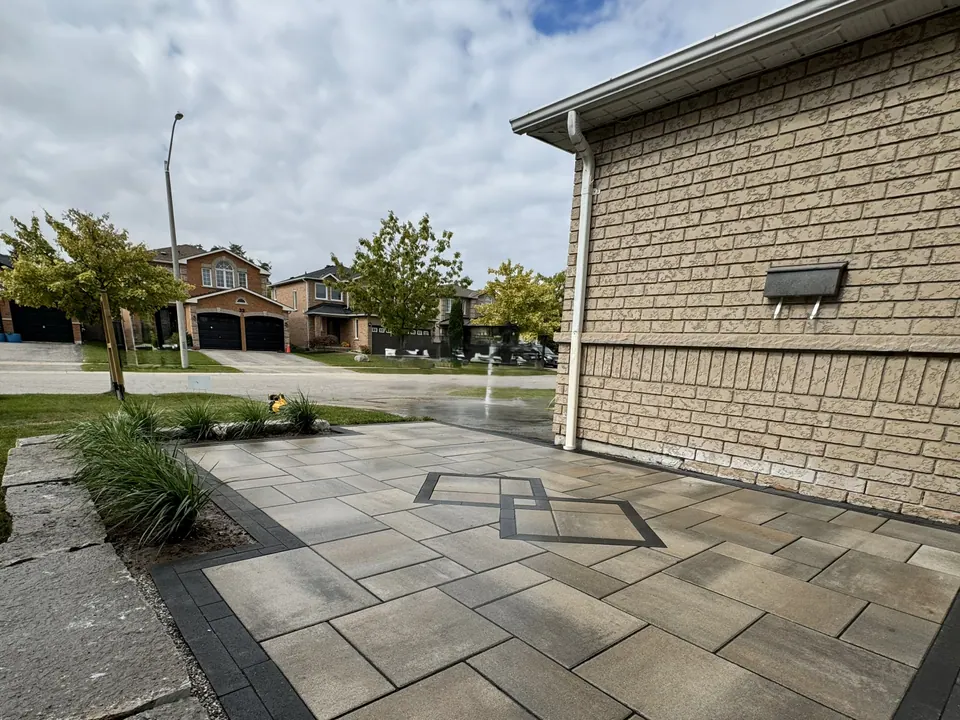
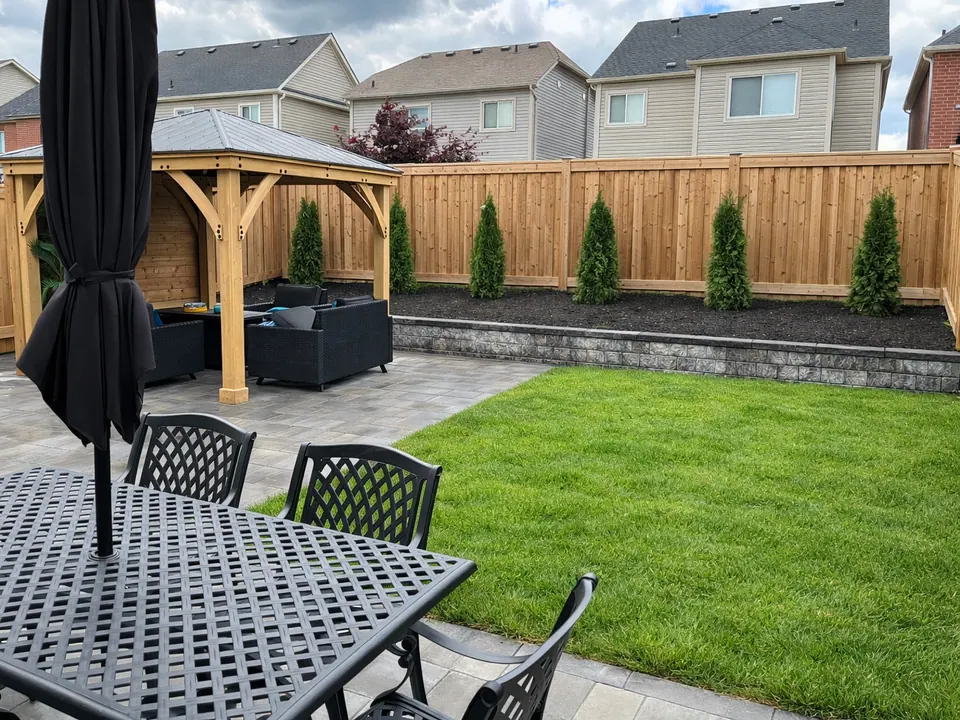
Patio work by Golden Maple
Full portfolio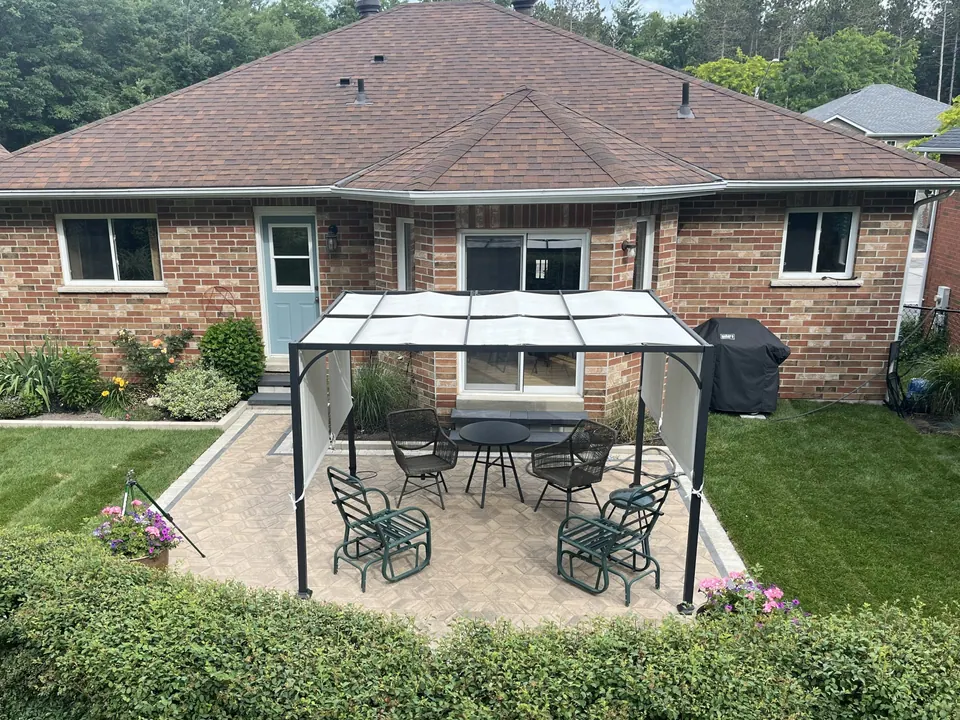
Questions we get about porcelain patios
Is porcelain good for patios in Ontario winters?
Outdoor-rated porcelain is very frost-resistant because it absorbs almost no water. The risk isn't the slab, it's the base. If the base heaves or settles, rigid slabs crack or rock, so the base and drainage have to be designed for freeze-thaw first.
Can porcelain go over my existing concrete patio?
Sometimes. If the slab is sound, drains properly and there's room for the added height at the door, pedestals or a bonded install over the concrete can work. A cracked or heaving slab usually has to come out first.
Is a porcelain patio slippery when wet?
Outdoor porcelain comes in textured finishes made for wet areas. Choose one rated for exterior and pool use, especially for steps and pool surrounds.
Does a porcelain patio cost more than interlock?
Usually. The material costs more and the installation is slower and less forgiving. Pricing is confirmed in the written scope for your site.
Do porcelain pavers need to be sealed?
Generally not. Porcelain absorbs so little water that it doesn't need a sealer the way concrete or natural stone can; follow the manufacturer's care guide for your finish. The joints are maintained separately.
Start with a planning range.
Then we walk the site.
The cost estimator gives you a planning range first. If the number works, we visit, measure, and put the base, drainage and materials in a written scope for your property.